Places Visited: New Mexico: Grants, El Malpais National Monument, Zuni Canyon May 4, 2007. We moved the motorhome to Grants on I-40 where we stopped in the Blue Spruce RV Park $13.50 for 50-amps, water & Cable TV with central dump. Blue Spruce is located on the south west corner of the I-40 exit 81 intersection.
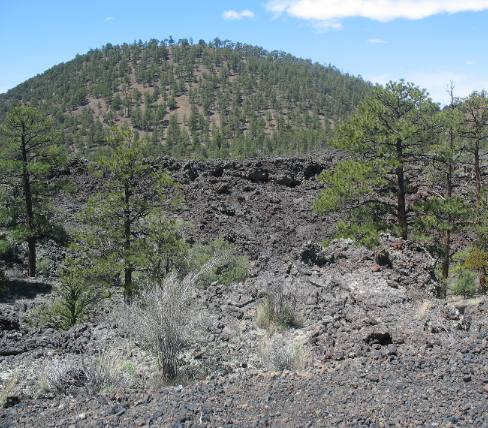
El Malpais means "the badlands" in Spanish and is pronounced el-Mal-pie-EES. El Malpais National Monument preserves volcanic features such as jagged spatter cones, a lava tube cave system extending at least 17-miles, as well as fragile ice caves. This picture features the cindercone of an ancient volcano in the background with a collapsed lava tube in the foreground.
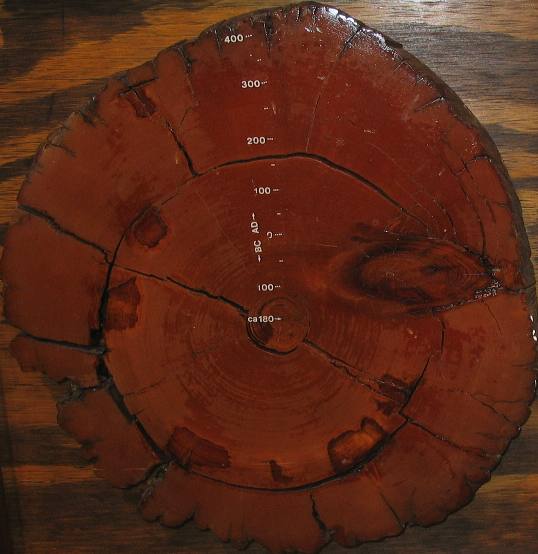
This is a "tree-cookie" or cross section of an old tree that has preserved the history of this region. Dendrochronologists (tree-ring scientists) can determine a great deal about past climate and fire history by studying the growth rings in tree-cookies such as this one. Each ring represents a year in the tree's growth. Thick rings indicate wetter periods; thin rings indicate dryer periods. Trees are also scarred by fire, marking the event for dendrochronologists. As dendrochronologists studied dead wood lying on the lava and cored into live trees they realized that some of these trees date to 200 B.C. This particular Douglas fir sprouted on the Bandera lava flow about 200 B.C. It lived until A.D. 550. This tree is the oldest dated wood in either New Mexico or Arizona. By examining wood from both living and downed trees, scientists have restructured a climate history of the El Malpais area for the last 2,000 years and a fire history for the last 600 years. This has resulted in a better understanding of tree growth and natural fire cycles on the lava flows. Note that this tree-cookie began life at 180 B.C. and lived until 400 A.D. Let those dates sink in. Pay attention to where on this tree Christ lived.
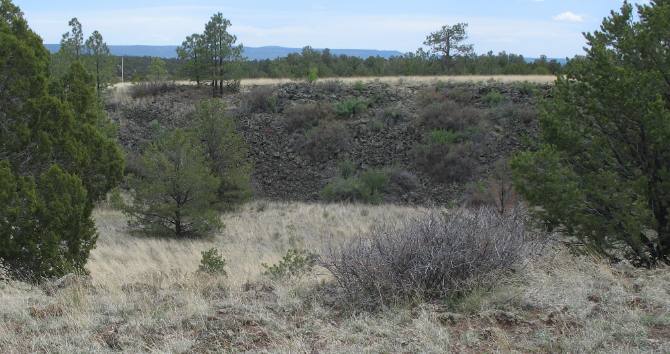
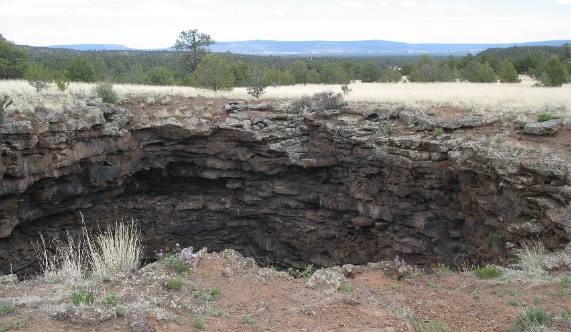
This is the far end of a good size sink (where a lava tube has collapsed). This sink is located on one of the walking paths in El Malpais.
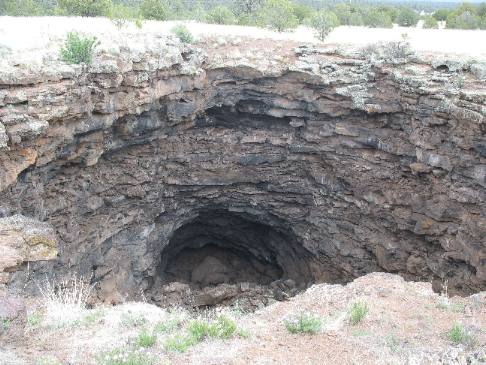
This is looking down into a small sink with a lava tube cave at the bottom.
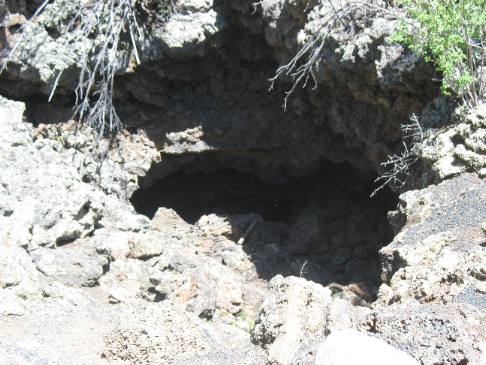
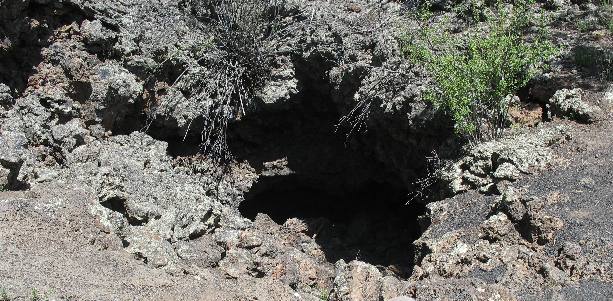
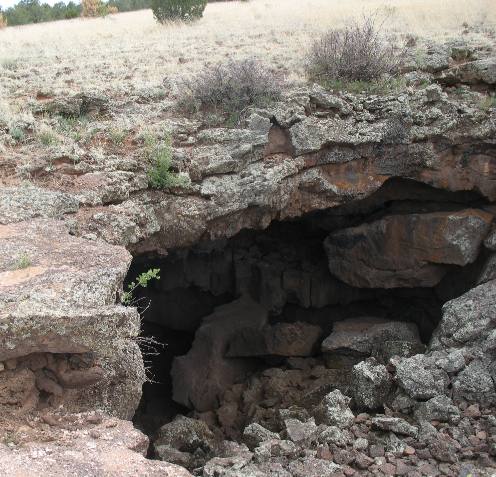
This hole leads into a lava tube cave. No telling what creatures live in the depths of that tunnel.
This is a good size sink that leads to a cave (lava tube cave).
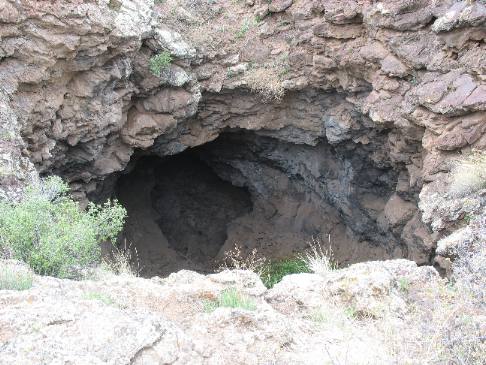
Looking down into that sink, pictured above, showing the entrance to the cave.
This is yet another sink with a lava tube entrance.
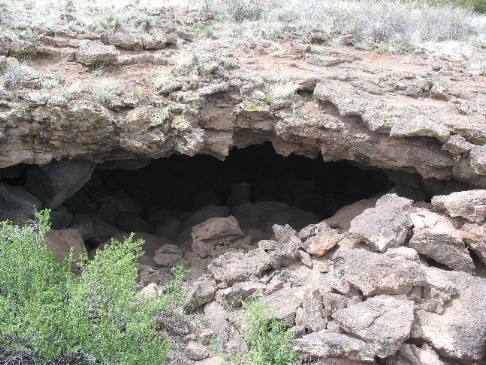
This is the entrance to one of the lava tubes that cavers can enter and explore in.
By now you can tell this is a lava tube that has collapsed and created an entry point for adventuresome cave explorers. Bats use one of these caves as home.
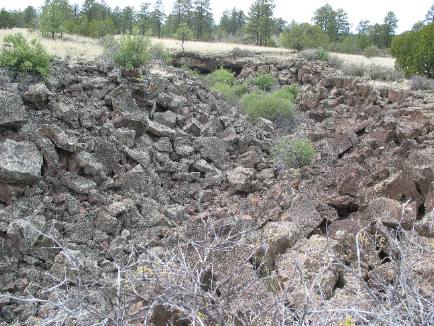
This is a collapsed lava tube. Talk about "bad-lands" or "devil's playground" this is it!
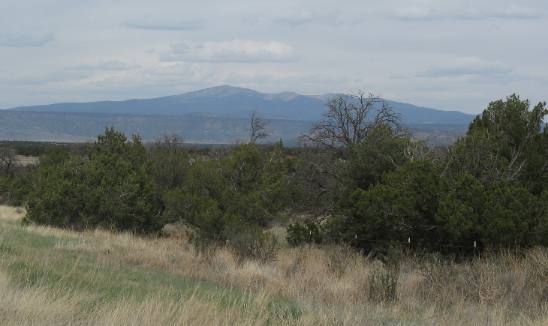
On our way back to Grants and our motorhome we snapped this picture of Mt. Taylor. Mt. Taylor is north of Grants and reaches over 11,300' in elevation. Some snow is still visible at the higher elevations. Grants is between where we are now and Mt. Taylor. Grants is in the valley. It snowed for two days following this picture. In a later travelogue we will show you what Mt. Taylor looked like after the snow fell.
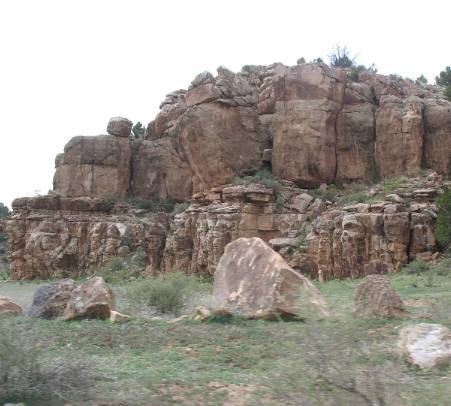
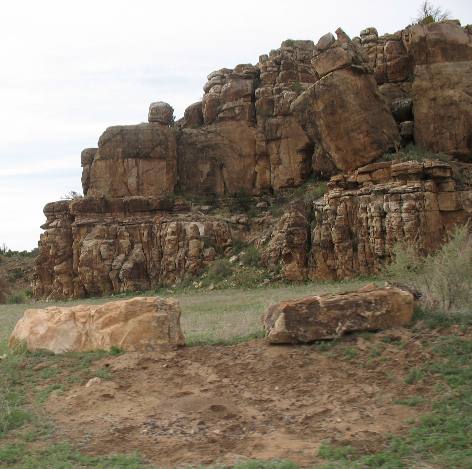
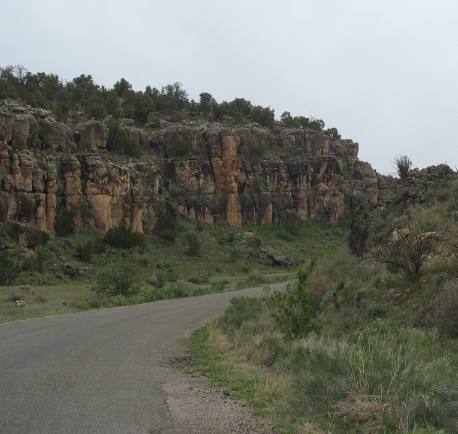
Once back in Grants we decided to drive out Zuni Canyon road that goes by the Blue Spruce RV-Park where we are staying at I-40 exit-81. Zuni Canyon is a canyon created by erosion of sandstone. It appears to me that Zuni Canyon skirted the west side of the volcanic activity of El Malpais
Sandstone cliffs as seen from the road through Zuni Canyon.
Some sandstone cliffs have turned grey or dark in color. Water is the key to where this color is and isn't. The grey color is lichens that depend on a small amount of moisture.
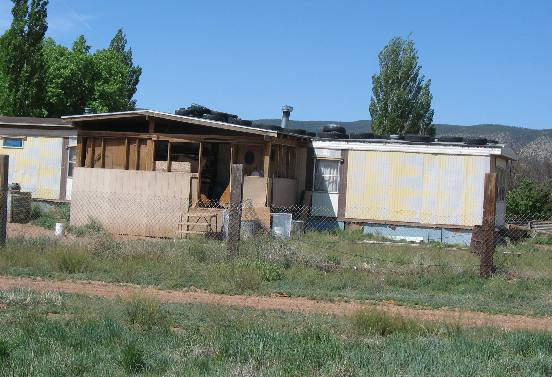
This was one of the living structures along the road into Zuni Canyon. I am always curious about the significance of automobile tires on a roof. Tires on roofs are a phenomena that we see in rural settings across the country. Someone recently told us that people put tires on the roof to keep the roof from rattling in the wind. Ok! That sounds plausible. It seems that aluminum and tin roofs flap in the wind making noise and possibly causing the roof to become detached from the structure. So some people put old tires on the roof to stop the noise and flapping. This fellow must have been experiencing a lot of roof rattle since he had tires piled two high in places.
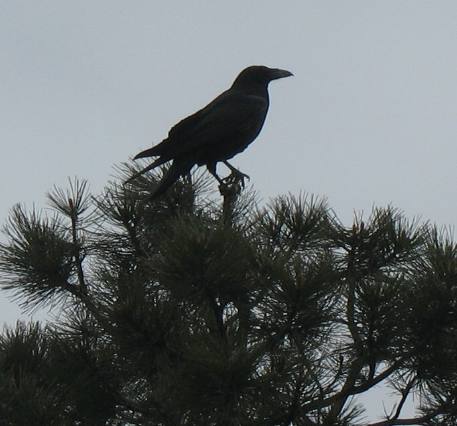
This raven was patrolling the area around one of the sinks in El Malpais National Monument.
Until next time remember how good life is. Mike & Joyce Hendrix
|
| ||

| |||